ll-37
anti-microbial repair
overview
What is LL-37?
LL-37 is a naturally occurring peptide consisting of 37 amino acids. It belongs to a family of proteins called cathelicidins, which serve as the body's "natural antibiotics." Produced primarily by immune cells (like neutrophils) and epithelial cells (found in the skin, gut, and airways), LL-37 is a critical first responder in the human innate immune system.
Whenever the body encounters physical trauma, a bacterial invasion, or high levels of inflammation, it releases LL-37 to neutralize threats and signal the tissue repair process.
Mechanism of Action: How It Works
LL-37 acts as a dual-threat molecule: it directly destroys pathogens while simultaneously acting as a biological "director" for the immune system.
Direct Pathogen Destruction (Membrane Lysis): LL-37 is highly cationic (meaning it holds a positive electrical charge of +6). Most harmful bacteria and fungi have cell membranes that are negatively charged. LL-37 acts like a biological magnet, binding directly to the pathogen's membrane. Once attached, it spirals into an alpha-helix shape, pierces the pathogen's outer wall, and creates "pores." This structural damage causes the microbe to leak its cellular contents and die.
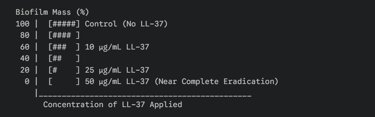
Biofilm Disruption: Many chronic infections (like Lyme disease or stubborn sinus infections) hide inside "biofilms"—a slimy, protective shield of sugars and proteins. LL-37 has the unique molecular ability to penetrate, dissolve, and dismantle these biofilms, leaving the bacteria exposed to antibiotics and immune cells.
Immune System Modulation (Chemotaxis): LL-37 acts as a distress flare. It binds to specific receptors on immune cells, summoning them to the site of injury or infection. It is an "immunomodulator," meaning it can ramp up the immune response to fight a pathogen, but later down-regulate pro-inflammatory cytokines to prevent immune overreactions (like cytokine storms).
Key Research Benefits & Applications
Broad-Spectrum Antimicrobial: Effectively neutralizes Gram-positive bacteria, Gram-negative bacteria, fungi, and enveloped viruses. Importantly, because it physically tears bacterial cell walls apart rather than targeting specific internal pathways, pathogens are highly unlikely to develop resistance to it.
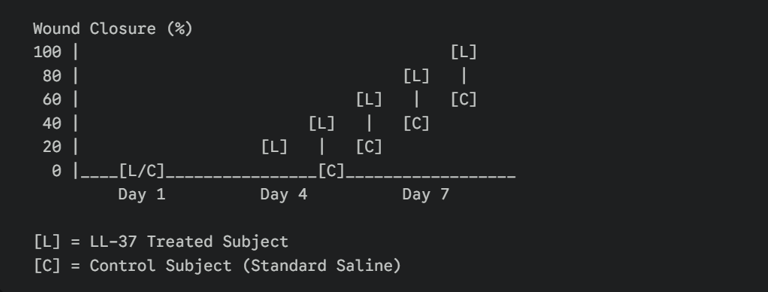
Advanced Wound Healing: LL-37 promotes angiogenesis (the creation of new blood vessels) and encourages the migration of skin cells (keratinocytes) to close wounds. It is highly studied in the context of treating chronic diabetic ulcers and severe burns.
Toxin Neutralization: It binds to and neutralizes dangerous bacterial endotoxins, such as Lipopolysaccharides (LPS), preventing systemic inflammation and sepsis.
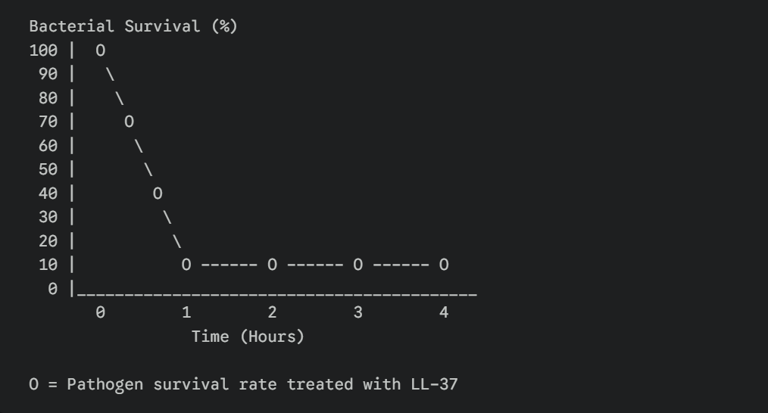
Graph: In-Vitro Bacterial Survival Rate Post LL-37 Introduction
This graph visualizes how LL-37's pore-forming mechanism results in rapid microbial death over a brief timeframe.
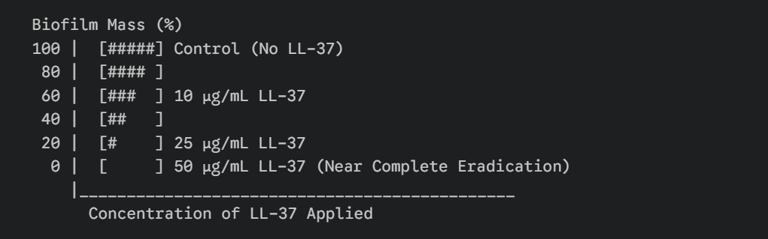
Graph: Biofilm Mass Reduction
This chart outlines the dose-dependent response of biofilm degradation when exposed to LL-37.
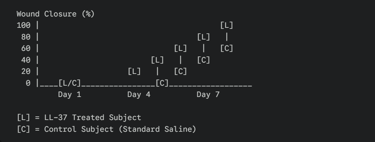
Graph: Accelerated Wound Closure Comparison
This chart demonstrates the timeline of epithelial tissue repair in subjects treated with LL-37 versus a standard control group.
Disclaimer: This information is for educational purposes only.